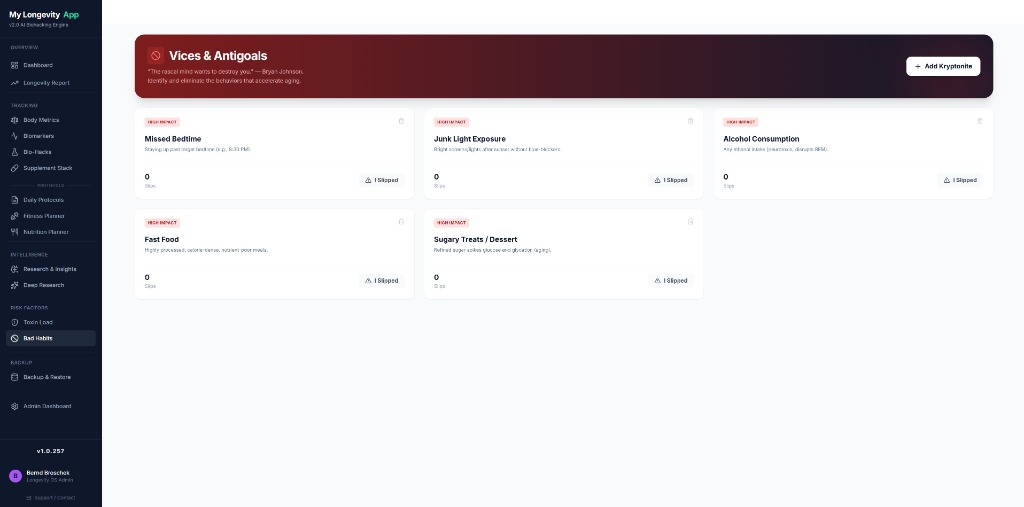
Unlock your health potential by monitoring key metrics for optimal longevity and well-being.
In a world where every heartbeat counts, the quest for a longer, healthier life can feel overwhelming. You may find yourself inundated with conflicting advice and endless data, leaving you uncertain about where to focus your energy. The truth is, without a clear understanding of your unique biology, achieving your longevity goals can seem elusive. This is where longevity data tracking becomes a powerful ally. Imagine harnessing the insights of cutting-edge technology to illuminate the path to your best self. At MyLongevityApp, we empower you to take control of your health journey by transforming complex data into actionable insights tailored just for you. No more guesswork—just a personalized roadmap designed to enhance your vitality and longevity. With every piece of information, you’ll be one step closer to unlocking the potential of your life. Let's embark on this journey together, where knowledge meets empowerment, and every day is an opportunity to thrive.
Many individuals seeking longevity data tracking often feel overwhelmed by the sheer volume of information available. They grapple with uncertainty, unsure of which metrics truly matter for their health and longevity goals. This confusion can lead to frustration and a sense of helplessness, as they yearn for a clear path to enhance their well-being but find themselves lost in a sea of data without guidance.
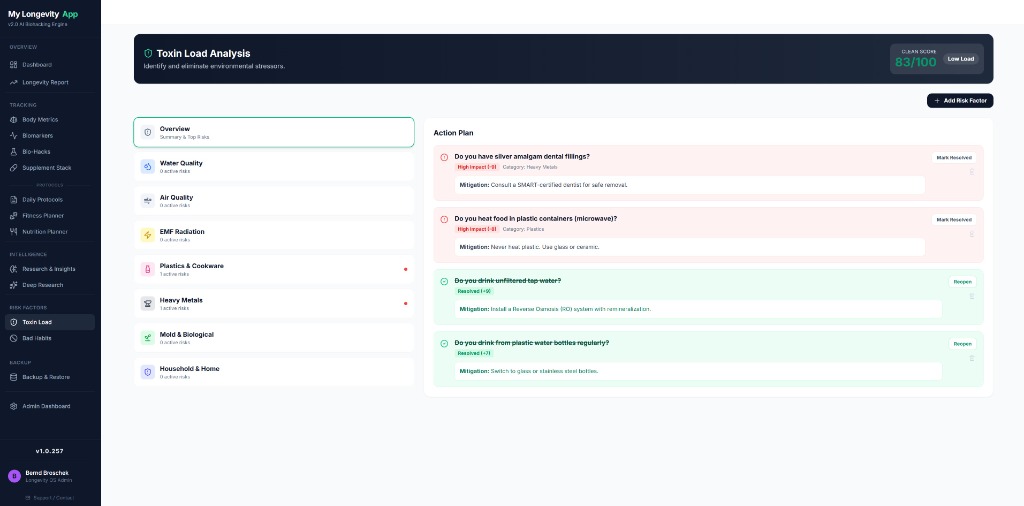
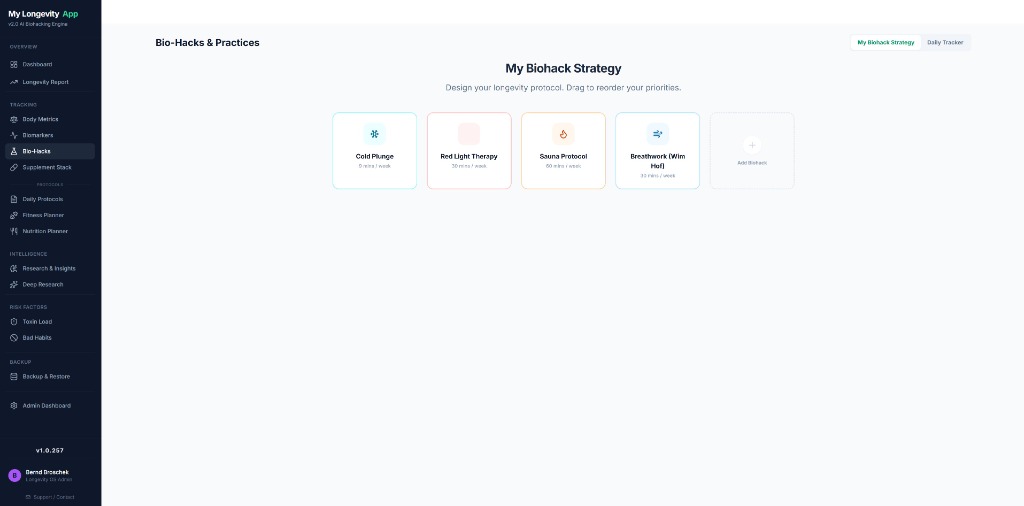
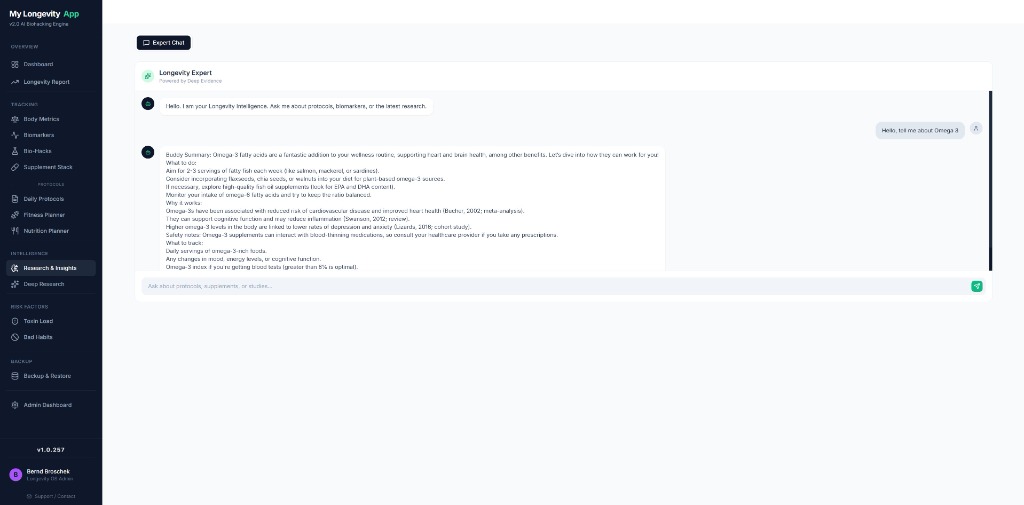
Advanced biohacking tools at your fingertips.
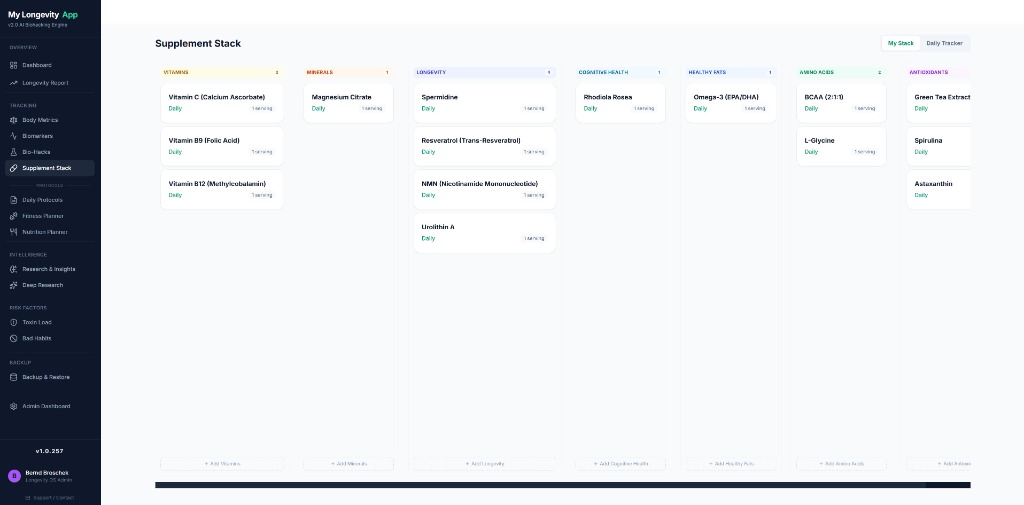
10 integrated modules working together.
Create your account in 30 seconds. No credit card required.
Upload blood work, track body metrics, or start with our AI questionnaire.
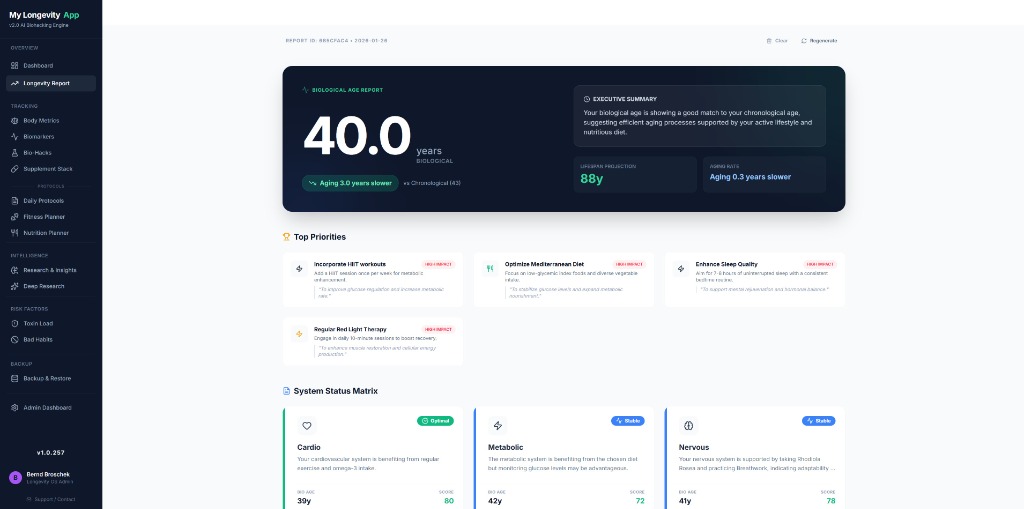
Receive your biological age score, personalized reports, and action plan.
Choose the plan that fits your biohacking journey.
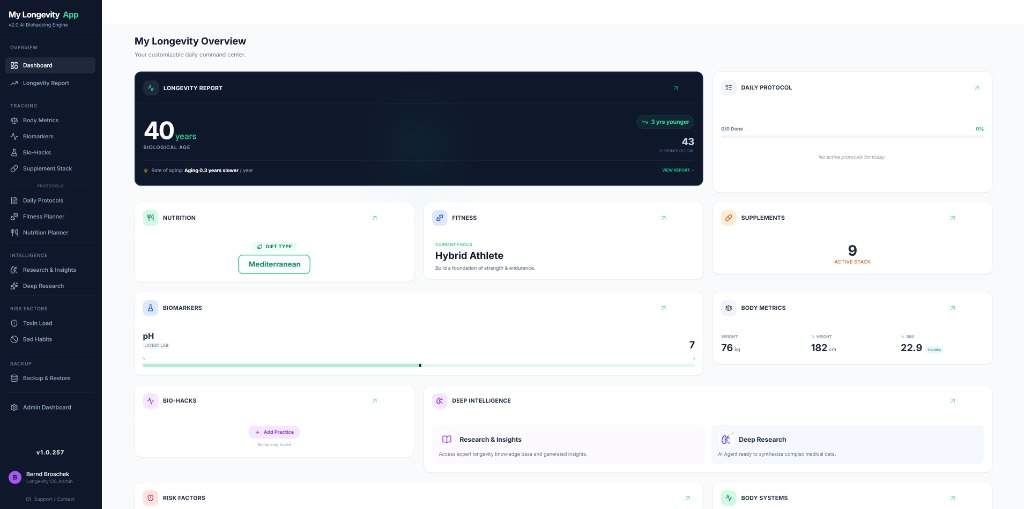
Utilize a user-friendly dashboard for effective longevity data tracking, allowing you to visualize your health metrics at a glance.
Leverage AI-driven analytics to receive personalized insights from your longevity data tracking, helping you make informed lifestyle changes.
Incorporate goal setting tools within your longevity data tracking to establish and monitor achievable health objectives.
In the quest for optimal health and longevity, data tracking is essential. MyLongevityApp offers a comprehensive approach to longevity data tracking, empowering you to take control of your biological age and overall wellness. Here’s how we build trust through concrete evidence and innovative features:
With these features, MyLongevityApp makes longevity data
Join thousands of biohackers optimizing their health.
"MyLongevityApp helped me lower my biological age by 5 years. The biomarker tracking is a game-changer."
"Finally one app that combines supplements, blood work, and daily protocols. I love the weekly planner."
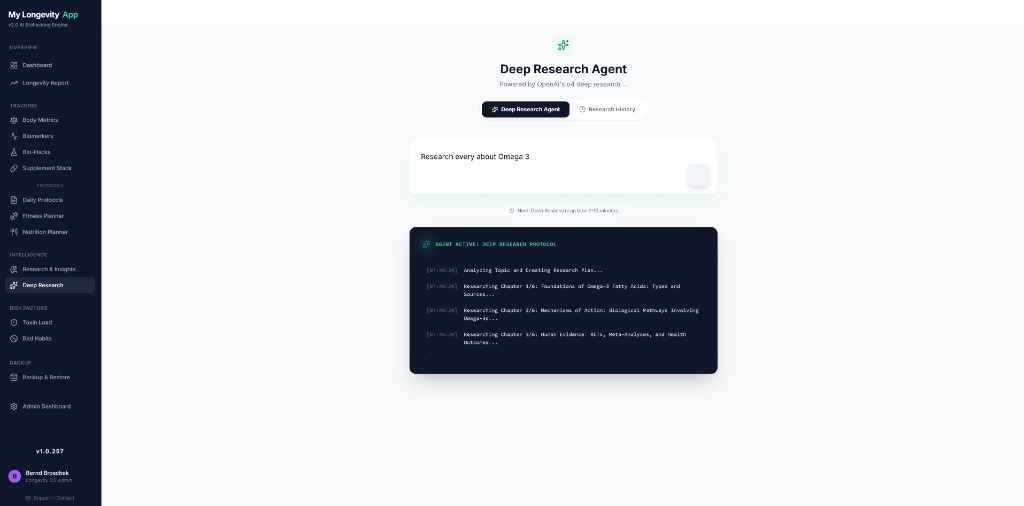
"The AI research agent alone is worth the subscription. It saves me hours of reading every week."
Tracking longevity data is essential for individuals aiming to optimize their health outcomes over time. By systematically collecting and analyzing various health metrics, one can identify trends, make informed decisions, and tailor lifestyle choices to enhance longevity.
One effective method for longevity data tracking is to utilize wearable technology. Devices such as fitness trackers and smartwatches provide real-time insights into physical activity, sleep patterns, and heart rate variability. These metrics offer valuable information about one’s overall health and can highlight areas for improvement. Furthermore, many of these devices sync with mobile applications, allowing for easier data management and analysis.
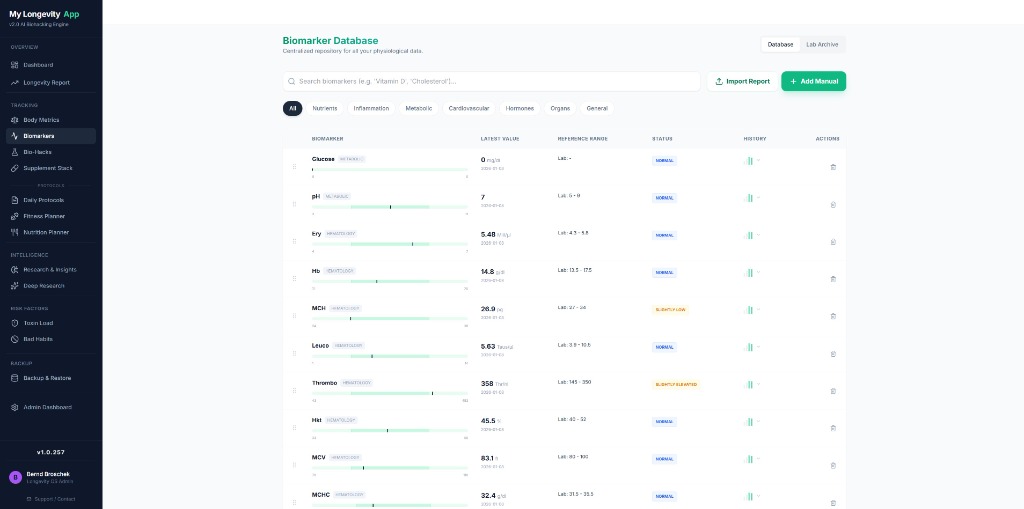
In addition to wearables, regular health assessments play a crucial role. Blood tests, genetic screenings, and biomarker evaluations can provide deeper insights into an individual's health status. Tracking these data points over time can reveal changes in metabolic health, inflammation levels, and other critical indicators of longevity. Integrating these assessments with tools like MyLongevityApp can streamline the data collection process, making it easier to visualize trends and adjust health strategies accordingly.
Diet and nutrition tracking is another vital component. By logging food intake through various apps, individuals can understand their nutritional habits and make necessary adjustments to promote longevity. This data can be correlated with physical health outcomes, providing a clearer picture of how dietary choices impact overall well-being.
To optimize health outcomes through longevity data tracking, individuals should adopt a multi-faceted approach that combines wearable technology, regular health assessments, and dietary logging. Establishing a routine for reviewing and acting on this data is crucial for making meaningful changes that enhance longevity.
Advancements in technology are revolutionizing the field of longevity data tracking, making it more accurate and reliable than ever before. Innovations in wearable devices, for example, enable continuous monitoring of vital signs, sleep patterns, and physical activity. These devices collect real-time data, providing users with instant feedback on their health status. By employing advanced algorithms and machine learning, these systems can analyze vast amounts of data to detect trends and anomalies, offering insights that were previously unattainable.
Moreover, integration with artificial intelligence enhances the predictive capabilities of longevity data tracking. AI can identify patterns in individual health data, allowing for personalized recommendations based on a user's unique biological markers and lifestyle choices. This level of customization not only improves the relevance of the information provided but also empowers individuals to make informed decisions that could positively impact their longevity.
Platforms like MyLongevityApp harness these technological advancements by combining user-friendly interfaces with robust back-end analytics. By aggregating data from various sources—such as wearable devices, medical records, and lifestyle inputs—these apps create a comprehensive picture of an individual's health. This integration fosters a more substantial understanding of how specific behaviors affect longevity, enabling users to optimize their health strategies effectively.
To truly benefit from these advancements, individuals should actively engage with longevity data tracking systems and leverage the insights they provide. Regularly monitoring personal health metrics and making data-driven decisions can lead to more significant improvements in overall well-being and longevity. Embracing technology in this way can set the foundation for a proactive approach to health management.
For individuals passionate about biohacking, maintaining a comprehensive record of their longevity data is essential for several reasons. First and foremost, longevity data tracking allows for a personalized understanding of how various lifestyle choices impact health over time. By documenting metrics such as sleep quality, dietary habits, exercise routines, and even emotional well-being, individuals can identify patterns and correlations that may not be evident without this data.
Moreover, tracking longevity data enables biohackers to experiment more effectively with different interventions. For instance, if someone decides to try a new diet or supplement, they can monitor specific health markers to assess the impact of these changes on their longevity. This level of detailed observation empowers individuals to make informed decisions, optimizing their biohacking strategies based on empirical evidence rather than anecdotal experiences.
Additionally, maintaining accurate records fosters accountability. When individuals commit to tracking their data, they are more likely to adhere to their biohacking protocols. This increased commitment can lead to more significant and sustained health improvements. Tools like MyLongevityApp can streamline this process, offering user-friendly ways to input and analyze various data points efficiently.
To maximize the benefits of longevity data tracking, individuals should set aside regular time to review their records. This practice not only reinforces their commitment to their longevity goals but also provides opportunities to celebrate progress and make necessary adjustments to their biohacking endeavors.
When engaging in longevity data tracking for personal health assessments, it is crucial to prioritize specific metrics that provide meaningful insights into an individual’s health and potential lifespan. Key metrics include biological age, which can differ from chronological age and offers a clearer picture of one’s health status. Measuring biological age involves evaluating various biomarkers such as DNA methylation patterns, telomere length, and metabolic health indicators.
Another vital metric is cardiovascular health, often assessed through blood pressure, cholesterol levels, and heart rate variability. These indicators are essential in understanding heart function and overall cardiovascular fitness, which are critical for longevity. Additionally, tracking inflammatory markers like C-reactive protein (CRP) can provide insight into chronic inflammation, a significant factor in many age-related diseases.
Lifestyle factors should also be prioritized in longevity data tracking. Metrics related to physical activity, nutrition, sleep quality, and stress levels contribute to a holistic picture of health. For instance, tracking daily steps or exercise frequency can correlate with improved longevity outcomes. Similarly, monitoring dietary habits, including the intake of antioxidants and micronutrients, can reveal patterns that either support or hinder longevity.
MyLongevityApp can facilitate the collection and analysis of these metrics, allowing individuals to gain personalized insights based on their unique health profiles. By focusing on these key metrics, individuals can make informed decisions about lifestyle changes and interventions that may enhance their longevity.
Start by identifying which of these metrics are currently tracked in your health assessments and consider incorporating additional factors that could provide a more comprehensive view of your health trajectory.
Tracking longevity data should ideally begin in your late 20s or early 30s, as these years serve as a critical foundation for health and well-being later in life. While it may seem early to focus on longevity, this is the prime time to adopt biohacking practices that can significantly impact your long-term health. By monitoring metrics such as sleep quality, physical activity, and nutritional intake, individuals can establish baseline data that informs future health decisions.
Starting early with longevity data tracking enables you to identify patterns and make adjustments before minor issues develop into significant health concerns. For instance, tracking your sleep patterns can reveal insights into how lifestyle choices affect your rest, which is crucial for recovery and cognitive function. Similarly, monitoring dietary habits can help you understand which foods fuel your body optimally and which may contribute to inflammation or other health issues.
Incorporating tools like MyLongevityApp can streamline the process of tracking this data, allowing you to efficiently log your habits and receive tailored recommendations based on your specific health goals. The earlier you start, the more data you accumulate, providing a clearer picture of your health trajectory and enabling you to fine-tune your biohacking strategies over time.
As an actionable takeaway, consider setting up a simple tracking system today. Whether it’s a journal, an app, or a spreadsheet, begin logging your daily habits related to sleep, nutrition, and exercise. This will lay the groundwork for a more informed and proactive approach to your longevity journey.
Join 10,000+ biohackers optimizing their health with AI.
Start Your 7-Day Free TrialNo credit card required. Cancel anytime.